Monday, November 2, 2015

delicious desserts: summer peach cobbler

Quick confession: I've had this post queued up, half-written for months now...

I'll never forget taking a trip one summer to pick peaches when I was a kid. It might sound like a lot to have to "take a trip" to pick peaches, but when you grow up on an island, almost everything other than the grocery store and the post office require a little adventure. We traveled by ferry to Knott's Island and picked the biggest, ripest, juiciest peaches. My cousin and I spent a good part of the afternoon in trees, each trying to pick the best peaches. At the end of the day, when peaches were picked and paid for, we were allowed to eat one. One bite and I remember the peach juice running down my arm and dripping off my elbow. It was a sweet mess.

Peach season is my favorite part of summertime. I love to bake peach pies with graham cracker crusts and crumb toppings. In fact, I already made a big batch of miniature ones for a bake sale earlier this summer. But lately I've been wanting to try something new to me, and that's a peach cobbler. Also super simple, transportable for summer get-togethers and not much prep or baking time. I found a great recipe via Gonna Want Seconds; the recipe below is based on it with my changes.

Summer Peach Cobbler

what you need (fruit):
approx. 6 cups of fresh peaches - peeled and sliced in preferred thickness
2-3 tbs sugar (I used evaporated cane sugar)
2-3 tbs brown sugar (I used light) 
1/2 tsp cinnamon
1/4 tsp nutmeg (or just grate some fresh nutmeg over peach slices)
dash of ginger powder
squirt of lemon juice
1 tsp corn starch (to help thicken fruit mixture - can omit)

what you do:

-peel and slice peaches (thick slices or chunks) into a large mixing bowl 
-add all other ingredients, stirring until peach slices are coated with spices and sugar
-pour into glass or ceramic baking dish (8x8 or slightly larger)
-bake the dish of peaches for 10-15 minutes at 375 while preparing cobbler topping (may want to place dish on a foil-lined baking sheet in case of boiling over peach juice)

what you need (topping):
2 cups all purpose flour
1/4 cup white sugar (I used evaporated cane sugar)
1/4 cup brown sugar (I used light)  
2 tsp baking powder
1 tsp salt
12 tbs cold, unsalted butter - cut into small pieces
1/2 cup boiling water
2-3 pinches white sugar - additional to above; set aside to sprinkle on top

what you do:
-in a medium sized mixing bowl, combine all topping ingredients except boiling water 
-cut the butter into the mixture with a pastry cutter or blend with fingers until combined and crumbly texture
-pour in the boiling water and stir just until ingredients come together
-take dish of pre-baked peaches out of the oven and top with the dough (spoon on and gently spread out with fingers or spoon; don't aim for smoothed perfection - leave it a little lumpy)
-sprinkle top of dough with sugar
-place dish back on foil-lined pan into the 375 degree oven for another 30-40 minutes, until the top gets a light golden color
-remove from oven and let cool slightly before serving; great alone or with ice cream!


Wednesday, June 17, 2015

one step forward, two steps back

Sunday was a discouraging day for truck work. I'm still frustrated and trying to figure out what I want to do I guess. But in short, I went from a fully functioning truck on Saturday to a giant lawn ornament by Sunday [insert WTF here]. I expected a 20-year-old truck to need work, but I wasn't expecting it to turn into what's shaping up to be a full-on restoration project. My excitement of getting the truck has definitely worn away and now I'm feeling more drained than excited. But, if I want a safe and running truck, I'll just have to keep pushing ahead.  

Yup, those should be connected. 
The day started out with kayaking plans, which would have been a 1.5 hour trip just to get there. I have to get rid of this bed liner so I have access to all the spots where I can hook straps into the bed to tie down the kayaks, so that was one problem. Living in an apartment doesn't really give you the freedom to leave a giant piece of plastic laying in your yard or driveway. Maybe the bed liner saved my ass from getting stranded on a highway. I'll just keep thinking that so I don't get mad at a missed kayaking trip and the current state of my truck.

What was supposed to be a quick look at the truck ended up with Ashley under the front end...where there's some loose connection related to the steering (it was the first of many "bad" things so the details are out of my head now). Then pointing out that one of the exhaust pipes had completely rusted off the muffler...which is also totally rusted. Then looking at the front brakes...which will need to be replaced for the truck to pass inspection (along with a new exhaust). But, you don't need to get a truck inspected if it doesn't even start, right? What had been a running truck 24 hours earlier now turns over but won't start.

So. What do you do with a giant hunk of metal that needs lots of new smaller pieces of metal that you don't have ready and waiting to be installed? Rip apart the insides for a deep clean and smaller/simpler repairs.

Seat, out. Carpet flooring, out. Side panels at the front of the cab, out. Panels at the back of the cab, out. Mismatched (I'm talking one new-ish and one random junkyard mismatched) oval speakers crammed in square stock speaker holes, out...and thrown in the trash. And a whole bunch of other little rubber and plastic parts that needed a good scrubbing, out.

I spent a lot of time with the carpet over the clothes line beating out all the dirt and then hosing it down, spraying it with carpet cleaner, scrubbing 20 years of grime out of it and then hosing it some more until the water finally ran clear. By the next night it was dry, spread out on my bedroom floor, covered in baking soda and being vacuumed. One clean shade of gray.


The rust in the cab was another project. The flaking rust was chipped out, and any rusty spots were scrubbed with a scouring pad or a wire brush. Then Ashley painted over all the rusted areas with POR-15 paint.

A bunch of bolts were sprayed for about the 100th time with WD-40, rusty parts were sprayed with POR-15 metal prep and by the time the sun was going down, the lawn ornament was put to bed for the night.

Tonight I scrubbed all the extra little parts from the interior and then read a bunch of Ford truck forums and watched a few YouTube videos to read about similar non-start situations, what the owners tried and what the problem ended up being. There are a lot of small things to try before groaning some more and sinking a little further under a big project. Let's hope one of the small things works.

So that's where I stand now with Blue. I hope this truck is seeing more adventurous terrain than its current parking space sooner than later.


Tuesday, June 2, 2015

The Adventures of Blue

For a long time, I've wanted a truck. They're fun. They get you places cars can't. They haul things cars can't. They represent a lifestyle a car just doesn't.

I may be a city dweller for now, but my lifestyle certainly doesn't fit my location. You won't find me downtown at a trendy bar or restaurant, or going to the museums or big events. Instead, I'm probably shoveling horse manure at the stables a mile from my apartment, or riding at the horse farm out in the country, or fishing, or digging in the dirt or a number of other more rurally-focused activities.

My quest for a truck has been a long one, which started of course with saving money. New truck? Trade in my car? Old truck? Keep my car? I work...a lot. Two jobs, 6 days a week, volunteering on the 7th day. One full-time job, sometimes with overtime. One part-time job sometimes as many as 6 days a week. I didn't have to do that, but I wanted to. I was focused on that goal. When you work hard, you get to play hard too. I can't count the number of times I looked at ads or got in touch with a seller. I was close once, but the seller backed out the day I was supposed to go buy the truck. I swore it was the perfect truck. A friend told me it wasn't...a better one was out there that was meant for me. I said he was wrong, but of course he was right.

Enter, Blue.

Blue's more than just a truck. For the couple of weeks we were in communication before I went to see, drive and pay for Blue, I learned that she served as a living memorial of sorts for the girl I bought her from. She has a special story linked to special memories. Her last owner never intended on selling her, and because of that, didn't want the truck going to just anybody. We learned that we had some things in common, among them, both being horse girls. For both of us, Blue might represent a chance to spread our wings a little.

I'm starting to learn all kinds of things, thanks to owning a truck. Blue has good bones, but needs a little work here and there. YouTube taught me what a distributor cap is and how to replace it. I did that. I never expected to have any kind of mechanical interest or skill.

Pretty soon, Blue will be hauling kayaks and playing in the dirt and driving down to riverbanks to go fishing. I'm excited for the independence and the fun, and the hopefully years of adventure ahead.


Tuesday, April 21, 2015

Whole30: Week 3 (March 2)

Coming into Week 3, I'm starting to feel annoyed with the Whole30 again. I'm frustrated with what I'm feeling like are excessive limitations on food even when I feel that I'm able to make good choices without the limitations. I'm also having trouble preparing Whole30 lunches. For breakfast, it's easy to get by with fruit or scrambled eggs. But by lunch time, I want something satisfying to hold me over for a few hours. Most of my dinners are one-meal, eat it when it's prepared kind of dishes. Sausage and sauteed vegetables do not sound very appetizing reheated in a microwave at the office. And it is COLD. Eating raw and cold foods is increasingly frustrating when we have days with single digit temperatures and even colder wind chills.

planning
Whole30 or not, planning dinner is never an issue. I'm home, I can cook anything any way I need to, and the food will be hot, freshly prepared and taste good. Planning lunches are a new challenge that I'm struggling with. Before Whole30, I'd bring dinner leftovers or some other option that doesn't really work with Whole30 (like avocado and muenster on a croissant). The Whole30 dinners I've prepared aren't really good for leftovers or reheating. Some foods that would make sense to have for Whole30 lunches I don't like, aren't practical or I'm just sick of. So that's my slump lately. Temperatures eventually got a little closer to our "normal" winter temperatures, so I had salads a few days - romaine and shredded cabbage with blackberries and balsamic vinegar.    

shopping
I really needed to go through the fridge before even thinking of doing any shopping this week to take stock of what extra vegetables, fruit and meat I had. And it's become a disaster so it needed to be reorganized. There are little bits of this and that, and if I don't round things up every now and then, a lot will go to waste. 

prepping
Nothing new in this department. I think once you figure out what works for you prep-wise, stick to that. How it works with your schedule, what kind of time you need, the timing to keep whatever you're making fresh until you eat or use it. 

eating
As I've been feeling that this Whole30 experience has been becoming less productive for me, I've been in a bit of an early transition week. I've had some meals that were not Whole30, some meals or entire days that were still completely Whole30, and some that were a mix. I had organic half-and-half in my coffee a couple days, and drank it black the others. 

progress
I think a lot of it has to do with timing, but I'm pretty much over Whole30 at this point. I'm irritated that I'm not eating as much satisfying food. My dinner the other night was terrible, and I ended up throwing about half of it in the trash. I didn't have anything else to make, so I made some baked cheese ravioli. If I wasn't doing Whole30, I can guarantee you I would have had a satisfying and well-rounded meal that would not have ended up in the trash or with me eating junk.

I mentioned that I weighed myself at the end of Week 1, and I lost some weight. Recently, I picked up a morning gig at a local barn. I feed and turn out horses from 7-8:30 a.m. and then go home, get ready and head off to my office job for a full work day. I use a Jawbone Up24 and according to it, I average about 1.5 miles of walking in that 1.5 hours at the stables. That's pretty good! Now that I have built-in exercise every day, I feel like I'm on a lot better path to staying fit. It's always been such a struggle piecing together the necessary parts of my day - work, errands and home obligations (cleaning, laundry, etc.), spending time with my dogs and making sure they get out for some exercise - that I often push off going to the gym in order to make time for other obligations. Seriously if I tried to fit it all in, I'd be eating dinner at 9 every night. No thank you.

I feel confident that the first two weeks of Whole30 opened my eyes to some bad habits that I had developed and got me comfortable with making some changes. I didn't feel like I would be seeing much physical change beyond what I saw in Weeks 1 or 2, and I was never expecting this program to be something that, at the end, had me running out to buy a whole new wardrobe two sizes smaller. So in Week 3, I began modifying the Whole30 to make this experience be what I needed it to be for me.

moving forward
I'm certain that if I ever do Whole30 again, it will not be during the winter. Given my daily schedule, it's so much easier to eat raw or cold foods for breakfast and lunch, and prepare a big, hot dinner. That type of eating would be so much better suited to warm weather (and when a lot more produce is in season) than the arctic winter we're experiencing right now.

Programs are built so that they're effective for as many people as possible. It makes sense to modify something with that kind of basic structure to make it fit personal needs. I am pretty sure I have learned what I needed to learn from Whole30. I have seen changes, lost cravings for the "bad" stuff, and have been reminded that moderation is key and that it takes both healthy eating and exercise to stay healthy. Forgive me if you're a Whole30 purist or if I'm not setting a good example, but I'm going to jump forward and start reintroducing some foods. I look at something like my typical stuffed pepper recipe: the peppers are stuffed with a mix of quinoa cooked in vegetable broth, chicken and vegetables with maybe a tablespoon or less of shredded cheese on top. You can't tell me that's not healthy, so the grain and dairy is that recipe aren't even a question for me.    

So it looks like I'm transitioning back into "normal" eating from here. 

Monday, February 23, 2015

Whole30: Week 2

So the good news is, I survived Week 1. Some moments I felt like I was barely hanging on. And I'll be honest...there were some cheats early on in Week 2. They came in the form of a handful of pretzels, a bagel with butter, a croissant, and sauteed broccoli with half a serving of white rice from the Chinese restaurant. And I stepped on the scale once. Do I think these things ruined the Whole30 experience for me? Not at all. They might have saved it. I was feeling like shit. Headaches, tired, frustrated with food. It's not behavior worthy of applause, but eating a bite of "bad" food here and there took the edge off and helped me refocus. Also, when something you've gotten your guts used to not having comes back in the picture in full force, you'll probably pay for it. Lesson learned, and a reminder to read about reintroducing foods when I get to the last week of Whole30.

planning
I don't deal well with headaches. Migraines are an occasional issue for me, and I don't like feeling like shit. I understand that this is part of the body's adjustment to the absence of crap food, but suffering through the blah-ness and headaches for so long doesn't seem super healthy to me. If I eat a little bit of a "no" food and make it through the week feeling healthy overall, I'm okay with that. I guess what I'm saying is it's a means to an end. If I had to classify the amount of Whole30 foods I'm eating vs those that are not, it's 95% or more Whole30 compliant. Some of it is purely by innocent mistake. The coconut almond milk I bought has carageenan in it, and the organic vegetable Better Than Bouillon paste I use has a tiny bit of cane sugar and soy sauce in it. Those are such minute infractions and amounts of the "bad" substances compared to something like binge eating junk food.

So how did I plan for this week with all those things considered? Before the end of Week 1, I began planning dinner and lunches for Week 2. So the intention of going full Whole30 is there. I'll go along with the menu and take it one day at a time.  

shopping
I did some late week restocking of produce during Week 1, so I had quite a bit left over in the fridge. I made one trip to the co-op and another trip to the regular grocery store and got myself settled for the week. A shopping list is your best friend in order to get in and out of the store with everything you need and also not let yourself wander too far into the danger zone.

prepping
Somehow, I feel that I was worse as prepping my meals during Week 2. Maybe because the newness wore off or I was a little less organized?

eating
One of my new favorite side dishes is roasted cauliflower. I felt like I was eating potatoes too often during the first week, and I used to think of potatoes as not a particularly healthy food, so it didn't make sense to me to be eating them so much during a month of exceptionally healthy eating. I like to mix the cauliflower up in a little olive oil, sea salt and garlic, then spread it out on a pan and roast it in the oven for 15 minutes or so at 450 degrees. This week I've also made some new dishes and reworked some normal favorites to work for Whole30. A new dish that was crazy, amazing good were chicken fajitas. An old favorite I reworked is pulled pork (so that the seasonings/roasting juices were okay by Whole30 standards).

progress
I feel like it was at some point toward the end of Week 2 that something finally sunk in: there are so many more flavors than just sweet or salty. Under normal circumstances, I'm fine with both when not overdone, but I think foods tend to be prepared with an overdose of one of these two flavors. There are so many herbs and spices and seasonings to use to create all kinds of savory flavors, which is what you tend to get a lot of with Whole30. That, or no extra flavor at all  - just the pure food flavors of foods like raw veggies and fruit, or simple whole food recipes like guacamole. Just think about all the different ways you can season and prepare chicken, for example. Whole30 is a great exercise in expanding your palette, trying new flavors and learning to appreciate the true flavors of everyday foods that might ordinarily be masked by unnecessary additives.

moving forward
While cheats aren't great, they're surprisingly helping me learn a lot about my eating habits. Things I never really paid attention to before. What was my go-to cheat? Not candy. Not ice cream. Carbs. Definitely something to watch out for when my Whole30 comes to an end. It was also clear to me that if I had something "junky" (one day I brought a handful of multigrain tortilla chips with lunch when I was in a rush...ugh, poor planning/prepping), I'll want to eat it before my healthy food. The easiest solution here is to not have the bad food, which is something to think about in a couple weeks.

Monday, February 16, 2015

Whole30: Week 1

As part of my new year newness, I decided to challenge myself to the Whole30. I didn't buy the book, because honestly, the program creators kind of sound like dicks. So I've read their website, reviewed the downloads, read wrap-ups and advice and interpreted guidelines from others who have completed the challenge, and sat down to plan my meal and make my shopping list.

Something that comes up in every review is addressing the question "is it hard?" and the same answer, along the lines of It's not really hard, it just takes a lot of planning.

So, here's my experience in the first week - no canned answers.

planning
It took me awhile to get myself mentally focused enough to commit to this. I want to eat what I want to eat. Mostly, I don't eat terrible food. But if I want those cheese fries, don't you dare get in my way. I also have the kind of personality that likes to freak out when restrictions are placed. All that said, I decided I'd commit to the first week. See how it goes, and if it was going well, plan for another. I'm battling two mindsets here, because while I don't like to be restricted, I also don't like to give up on a challenge.

So you make the decision to do Whole30. Then what? I printed out a few of the downloads available on the Whole30 website: Program Rules, Shopping List, Meal Planning Template and Guide to Grocery Shopping. I sat down with these and began planning out a week's worth of meals. Planning a week of dinners is nothing new to me, but I don't usually plan out breakfast and lunch. And with restrictions on grain, dairy and sugar intake, you have to get a little more creative. Soy is also a no-no, and that shit shows up in everything. Watch out.

Planning these 21 meals and creating the shopping list afterward took me about 2 hours. Compared to my "normal" eating life, most of the extra thought went into varying my typical side dishes for dinners and coming up with ideas for complete lunches, as well as having a list of acceptable snack foods. I found it helpful to keep a food journal and write down all of my meals and snacks for each day, which serves as a good reference for future planning.

Also, if you don't already compost, you might want to start. You'll have so many fruit and vegetable scraps that it'd be a shame for them to go to waste.

shopping
For as massive of a grocery list as you'll have, shopping will surprisingly not take as long as you might expect. You've probably heard about shopping the perimeter of the store for healthier foods, and that's pretty much what you end up doing for Whole30 meal ingredients. Fruit, vegetables, meat and eggs just about cover it. You might venture into the danger zone for a few items like cooking oils, nuts and spices. Put your blinders on and walk fast. The big kicker to shopping is that your total at the check-out line might be more - maybe a lot more - than you're used to spending. I think it partially depends on what kind of food you normally eat. If you're really sticking to the nitty gritty details of Whole30 and getting all the free range meats, definitely expect a higher bill. And with all the produce you'll be buying, if much of it is not in season, you'll be paying extra. That was probably the biggest increase in my spending. I'm usually fine with apples and bananas and maybe even some berries if they're on sale during the winter, but knowing how much I'd have to load up my meals with fruits and veggies, I wanted more variety and in February, that variety has a price.

prepping
You will be helping yourself out immensely if you take the time to do small tasks like washing and cutting produce in advance. When you're hungry, you want to eat. Most of your Whole30 foods will be in the fridge, so there's no opening the snack cabinet to grab a salty, crunchy something when you want a quick bite. When you come home from work tired and grumpy, you'll be happy to remember that you've already advanced yourself a couple of steps in the process of making dinner. This step has certainly helped me stay on track. I try to have fruit and vegetables for the next day ready the night before. That means breakfast and lunch all or nearly made and in the fridge ready to go the next morning. There's no running to the deli to grab a sandwich for lunch if you didn't have enough time to make lunch that morning. Keeping yourself successful isn't going to cost you big chunks of time. Plan for maybe 30 minutes of prep work at night, and that should have you ready to go, maybe even including time for prepping the coffee pot (and hallelujah you can drink coffee! I've been taking mine with coconut almond milk, no complaints). If you weren't much of an at-home chef before Whole30, put your apron on because it's going to get messy. I love to cook (obviously), so I love that I'm cooking every single night. There's a satisfaction that comes with planning and preparing a meal, which brings me to...

eating
So, apparently these Whole30 dictators advise to only eat 3 meals a day, except if you work out. After exercise you're allowed a "bonus" meal to help your body recover. Well, This is a rule that I am breaking. The whole (haha) point in doing this is to be successful, right? That said, I eat when I need to. Maybe they've crafted some reason as to why eating just three times a day is best, but I'm not worried about it. If you know what foods you should and shouldn't eat, and understand the proper portioning of those foods, eat them whenever you need to. I've never been super hungry early in the morning, so that combined with time restrictions have me eating a smaller breakfast. I also don't have a lengthy lunch break, so a gigantic lunch isn't really an option either. Instead, I eat 3 meals a day and 2-3 snacks a day. Overall I've been eating a much larger quantity of raw foods than usual, thanks to all the fruits and veggies. Since raw foods aren't loaded down with grease and fat, I think our stomachs don't feel as full from them, so you eat more of them to accomplish fullness. My non-expert opinion says that's okay. Half a pint of strawberries for a morning snack? Bring it on.

progress
Measuring progress in the first week is...different. You weigh yourself and take body measurements when you begin the Whole30, and are encouraged not to do either of those until you've completed your 30 days. If you read up on Whole30, especially other people's accounts of their experience, you might be eager to see your loss of pounds and inches. Don't get fixated on that so soon. The first week is probably a lot of adjustment on your body (more or less depending on how you regularly eat). You can measure this by thinking about a few things. Consider digestions, energy level, how well you're planning and eating meals, how your body feels overall with the dietary change, the way you're sleeping, etc. Are you tasting flavors differently than you did with your previous eating habits? You're making big changes, and Whole30 rules are strict. The overall change in eating habits and feeding yourself healthier food is the big picture. So that package of organic bacon you bought has a little bit of sugar? Don't beat yourself up over it. I think the progress bar is full on the first week just by making it to the end.

moving forward
Planning for Week 2 (you haven't gotten the best of me yet, cheese fries), I'm starting with looking at what foods I have left over from my first week of grocery shopping. Best to use those up early in Week 2 so nothing goes to waste. Being familiar with the good foods and the no-nos, I'm comfortable with spending a little time looking up new recipes and maybe trying a few. I also had some recipe ideas I didn't use during the first week, so those are in my arsenal as well. Finally, I can fill in remaining meals with some of my first week favorites, which I know thanks to my food journal. I experienced headaches during the first week, and I'm not sure what to attribute them to. Maybe it's a sign of my body detoxing. It could have been that I wasn't getting portions right or wasn't eating frequently enough. And maybe it was just weather - we did have several rainy days. Whatever the cause, it's something I want to pay attention to in the coming week. I'm hoping that during week two, I'll be less focused on the foods I'm not eating. Let me provide some clarity for the "is it hard?" question. Is eating good and healthy food hard? No, it is not. Is letting go of all the unhealthy but stupidly satisfying foods you used to eat hard? Ohmygodyes. Every day I thought of foods I wanted to eat, whether it was an egg bagel smeared with butter, the red velvet whoopie pies I wanted to make, my favorite Valentine candies I walked by at Target...every day there was some forbidden food on my mind or that I saw or that I smelled and I absolutely wanted to devour it. But I knew I had a goal, and I wanted to stick to it. I hope those thoughts start to go away in the remaining weeks. I will say, if the headaches do not subside, I'm going to have to make some adjustments.
          

Tuesday, January 20, 2015

main meal: stuffed peppers

It's a new year, and while I am not all about resolutions, I am focused on newness. I've been looking through the schedule of classes at my gym and decided to try a new class. I'd considered signing up for personal training but thought maybe some of the more intense classes might be just as good. You need activity as the first step to seeing any progress, after all. So I went to the HIIT class - somewhat nervous of how it would go - and it was good! I knew I would most likely be starving afterward, so I wanted a dinner that was going to fill me up, both with satisfaction and nourishment. I've never made stuffed peppers before. In fact, I've never even eaten stuffed peppers before. I had everything I needed to make them, so I gave it a shot. They were great! I'm really glad I tried a new meal, and I think it's a new favorite (see what I did there?).

STUFFED PEPPERS

what you need:

up to 6 bell peppers (the more colorful, the better)
1/2 cup quinoa
2-4 boneless skinless chicken breast strips
1 tbsp olive oil
1 cup water or broth (vegetable or chicken)
2-3 large carrots
2-3 stalks of celery
1/2 cup corn (canned or frozen)
cheese

what you do:
-prepare quinoa (two parts liquid, one part quinoa) by adding liquid and quinoa to a small pot, bring to boil, cover and lower to simmer until water or broth is completely absorbed
-cut chicken into small pieces and cook through in olive oil in large pan
-prepare vegetables by washing and chopping carrots and celery
-slice around tops of bell peppers, twist and pull out (hopefully with seeds); slice out spongy flesh inside pepper and rinse out any remaining seeds
-after quinoa and chicken have cooked, mix in a large bowl with carrots, celery and corn; add cheese if desired
-fill the peppers with the mixture and mound just above top of pepper; stand upright in a baking dish and sprinkle with cheese
-bake uncovered at 400 degrees for about 20 minutes

Stuffed peppers are a great and easy meal with so many options for the "gut" mixtures - quinoa and veggies, rice and veggies, taco stuffing, chili - so many! While the stuffing makes enough for 6 peppers, I made 3 and froze the rest. It freezes and thaws great! Just take it out of the freezer the night before or early in the morning before making your peppers. I only topped my peppers with cheese, so I don't know how well the stuffing will freeze and thaw with cheese added.

stuffed bell pepper with tostones


Wednesday, October 22, 2014

home is where the heart is

This past weekend I took a couple of days off work and made a long weekend trip to Raleigh for the opening weekend of the North Carolina State Fair. Raleigh isn't the part of North Carolina where I did most of my growing up, but I did spend a good chunk of years there from halfway through high school until a little while after graduating college, and I love that city. Anywhere in North Carolina is home to me, and I'm always so happy to be back.


I stuffed myself silly with fries, a grilled chicken sandwich, Dr. Pepper and a vanilla milkshake from one of my favorite local spots. This place is a stone's throw from my old high school and just a couple miles from where I used to live - if even that far! No trip to Raleigh is complete without a meal from Char-Grill.


You also can't visit without a trip to the NC Farmers' Market. It's right down the road from Lake Wheeler, where I used to work (still my favorite job ever!). The colors of all the fresh produce are amazing. The freshness is in the air. Because it's NC and the temperatures are still great this time of year, you can get practically any fruit or veggie. The biggest bounty right now though are the pumpkins of course. And not just your regular old orange pumpkin awaiting its knobby toothed fate as a jack-o-lantern. This pretty pink and green pumpkin is a Jarrahdale and I'm in love with it.


Aside from all of the usual fair attractions like the rides, food and animals, the tractor pull is the loudest, most awesome thing to do. The idea is simple: trucks and tractors pull massive weights as far as they can and the one that goes the farthest is the winner. But it is so much more than that!


The fair is also a great opportunity to see some big name bands in a relatively small venue for super cheap. Last year, the Florida Georgia Line tickets sold out before I got them. but Parmalee was a pretty good show this year. And only $10!


You just cannot get good or real sweet tea in the north, so I have to get my fill anytime I'm below the Mason-Dixon Line. Bojangles and Smithfield's in one day? Oh, Lord. Biscuits, BBQ and sweet tea make me so happy!


Back in Philly after the long weekend, and this pup was so happy for my return. She might be a Philly dog these days, but she's a Carolina girl, too. I picked my faithful sidekick up at Lake Wheeler Park, which is of course how she got her name (Wheeler). One of these days she'll get to go romp around lakeside again :)

Tuesday, September 16, 2014

hunters and gatherers

The summer season is winding down and so is this season of gardening. This week's temperatures are below what we're used to seeing this time of year, so we're already dipping into the 50s overnight with daily highs just above 70.

I'd rate the summer garden as semi-successful. Certainly more successful than last year, but crops that have done really well in years past didn't produce much this year. Maybe it's time to test the soil and see if it's too depleted of certain nutrients. The big winners this year were the green beans and tomatoes, and the zucchini did okay. Bell peppers were much more successful this year than any other year, and the pumpkins and gourds have been as well. Oh and the hops have gone crazy. There are at least four full 1-gallon bags. Just like last year, the cucumbers had another bad year, when two years ago we couldn't even give away all the extra.

A new challenge this year was a team of groundhogs making an appearance any time the cruciferous veggies or potatoes had leaves. I trapped and relocated two groundhogs, and later spotted the biggest (and still at large - har har) groundhog. Broccoli had never been successful before, but this year looked like it might actually grow. The groundhogs ate the leaves off the broccoli, cauliflower, brussels sprouts and cabbage. I tried a number of repellents - dog hair, peppermint Dr. Bronner's, fox urine. The leaves grew back once, but then were all eaten again and the plants were eaten down to little green nubs. It was time to wave the white flag and forget about enjoying any of those homegrown veggies.

Before the weather gets too cold and stays that way, I think one more shot at some fall crops might be worth it. Maybe some lettuce and spinach at least. Maybe the groundhog will go into hibernation early, and if not, I have a live trap ready and waiting.

Speaking of trapping, I completed a hunter/trapper safety course a couple weekends ago and am now able to get a hunting license. And I have a deposit on a new bolt action rifle that I'll be getting in the next week or so. I never really imagined myself a hunter, but we all know how I feel about sustainability. As it is, I purchase the vast majority of any meat or fish that I eat from the co-op, which does a pretty good job of selecting farmers who raise their livestock in a respectable manner. I want to be able to do more though, to provide for myself. I worry that we have lost a lot of skills older generations knew so well, and I'd rather not trot off ignorantly into the future. One of the instructors of the course mentioned some numbers that were pretty amazing. He mentioned the cost of having a deer butchered along with the pork he paid for to blend with the venison was around $80. What it yielded though, was the really amazing part - over $400 worth of meat. So whether or not I'll have a place to hunt or go hunting is still up in the air, but I like knowing it's a possibility. And in the meantime, there are places where I can go practice with my gun and gain the skills I need to be a good hunter when the time comes.      

Friday, May 30, 2014

don't mind the mouse...*

*if you're a tad bit squeamish or a super softy, this post might not be for you...see ya next time.

By this point in our lives, we have likely had to come to terms with death - animal or human - and we certainly know what it means to live.

I understand that if I one day have my dream of a little farm to call my own, I'll be experiencing life and death more frequently and on a greater scale, even if my only farm animals are chickens. This morning a mouse tested my grit for such situations. Turns out I don't have much grit.

Snap. The sound that makes you cringe when you have mouse traps set in your house. Around 1 a.m., I decided to leave the trap. I'd much rather pick up and dispose of a stiff mouse than a fresh kill.

Hours later, the coffee was brewing, the alarm was ringing and the mouse trap was in need of checking. Ugh. There it was - tail sticking out from under the stove...as was most of the trap. Confused, I took a breath, grabbed a plastic grocery bag and gently pulled the trap out from under the stove.

Noooooo no no no no no. The intruder wasn't dead! The trap had only caught his leg. Instantly I felt sad for the little guy...felt terrible that he may have suffered all night long trying to get out of that trap.

What do I do? I can't drop a suffering, squirming mouse in the trash! Chop his head off? That's what you would do with a chicken, right? Run him over with the car? Take him out back and whack him with a shovel? I sat on the kitchen floor and stared at him. My dog Marty kept running back and forth between the bedroom and the kitchen to check in. I couldn't do those things...not today. So I put him in a bag. And then another and another and another. And then...then I put him in the freezer. And there is where my once-enemy, now object of my sympathy will spend his day until I get home from work and can take him out to the trash, no longer squirming.

So please, don't mind the mouse in the freezer. He won't be staying for dinner.    

Wednesday, May 28, 2014

onward and upward

The first lesson in chasing your dreams is to never give up. Sometimes circumstances change, and with that, the path and your means of traveling it from point A to point B may also need to change. Onward and upward, friends!

Remaining in a city with dreams of farming proves challenging. Once you've filled your garden plot for the season, there's only so much weeding and watering that can be done until the plants start growing and you have to thin them, train them up trellises or can start harvesting your small crop. It's discouraging to wake up with the desire to be productive and get a little dirt under your nails when it appears there's little to no work to be done. That's when I look up. You can lay back and gaze up at the cloud-puffed sky, but I'm looking up to the roof.

When the ground is full and you have 20 more tomatoes and some herbs that need a home, and more seeds still sprouting in trays, it's time to think outside the box. Well, in the box, but outside the fence lines. I am fortunate enough to not only have a nice sized garden plot but also have access to a small portion of my building's roof that gets just the right mix of sun and shade. With the desire to dig in the ground is still very much present, it was time for another trip to the store. Soil, manure, perlite, peat moss and marigolds were on the list.

A couple beers and an afternoon later, a container roof garden was ready to grow.

Tomatoes, marigolds, herbs and other flowers potted for the roof garden.
Bamboo stalks were added in the pots to help keep those rowdy tomatoes in line.

Friday, May 16, 2014

ever changing

Dear Friends:

With the nearly three weeks of radio silence here on part of the whole comes some news. In the last two posts, you may have noticed my hinting to some anticipated changes. The changes were big...incredible...exciting! But sadly, are now off the table.

In the works were plans to move out of the city and relocate to a farm in Delaware County. Home would have been a historic cottage built in the 1700s, surrounded by creeks and open land - part of large horse farm where I already spend much of my weekends. The long commute would have been a hit, being 25 miles from work, but I imagine it certainly would have been worth it.

Ideas were sprouting for a large garden - enough to produce extra for a neighborhood farm stand. I was excited to start growing gourds and pumpkins, which could have also been sold at the farm stand. I've been collecting and reading all kinds of books about homesteading and small scale farming, saving images and building plans for potting benches and mobile chicken coops, looking at fire pit designs and lawn furniture. Maybe you know that I want to be a farmer someday, so this was the perfect opportunity to test the waters. It was a chance to get a feel for the work involved, the quality of what I could grow, the value it added to everyday life.

So, I'm disappointed to say that this plan is no longer working out. Much of what has been planted in my current garden was done so in in-ground containers for easy removal and transplanting. It's hard to put down roots when you don't know where you will grow, right? Lesson from the plants.

I was also excited to get back into regular blogging, using what would have been my new living situation and lifestyle as daily inspiration. What's it like to live by heat from firewood in a 1700s stone cottage in the dead of the Pennsylvania winter? What sort of recipes would I have been able to pull together using all the produce from my big, new garden? How successful is raising chickens when there is a fox den on the other side of the yard and two resident guard dogs (don't tell the little one he's only 17 pounds!)? Oh yeah...and how about waking up to gun shots all throughout deer hunting season? Maybe someday I'll know, but for now, it all remains unexplored territory. An unwritten chapter, if you will.      

For now, I'll keep on digging in my current ground, always dreaming about tomorrow.

The Mill House
image from thomaswillcox.blogspot.com

Thursday, May 15, 2014

Grazin'

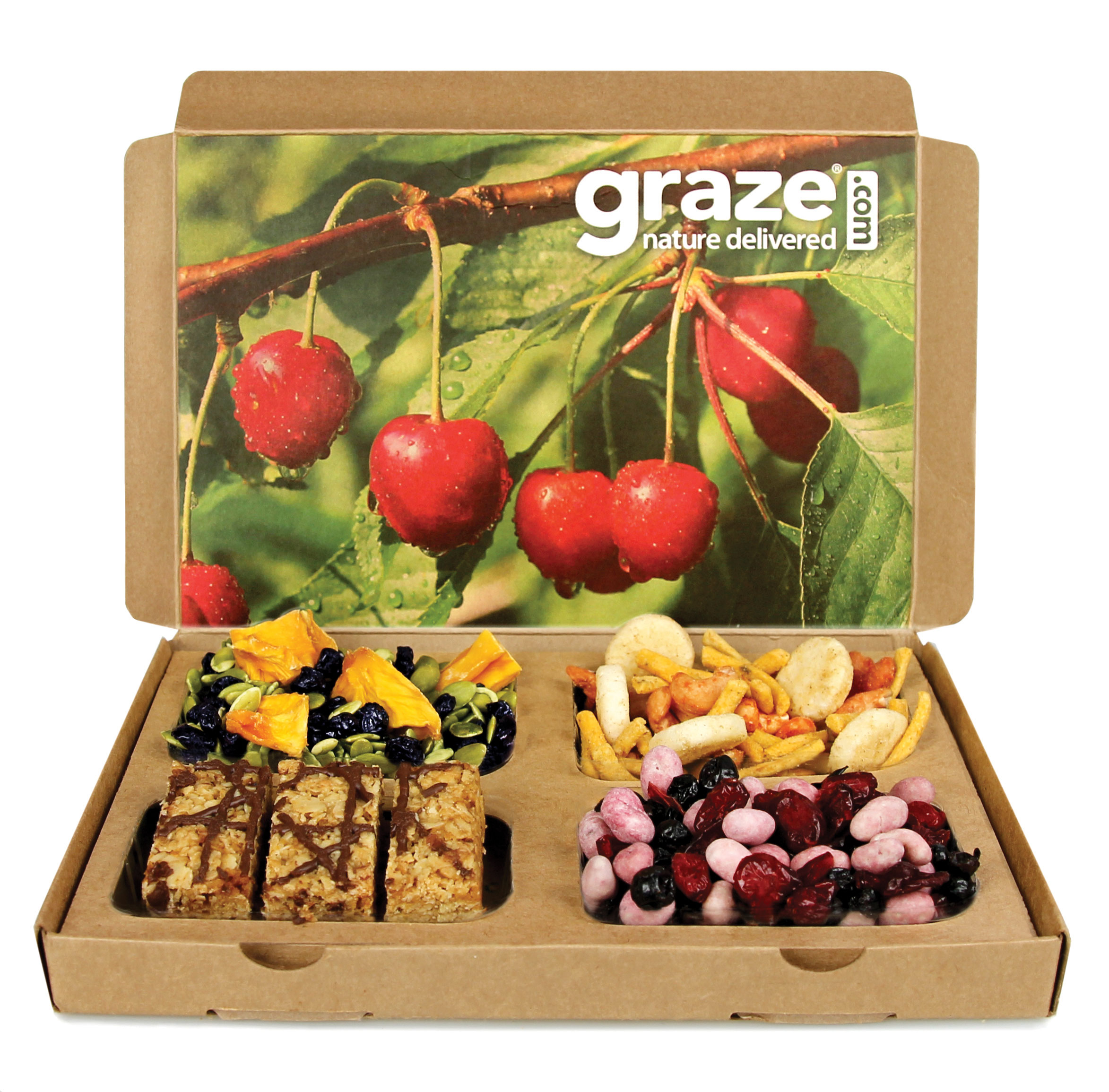
Back in late November I heard about a program called Graze - it's a mail-order subscription service for boxed snacks. Every one, two or four weeks, a little box gets delivered to your home (or in my case, I chose my office) with four individually packaged snacks inside. Each box costs $6. When I first heard about Graze, I used a subscription code that allowed me to get two snack boxes for free. No reason not to try it!

These types of subscription services seem pretty popular lately. I've seen other companies offering snack boxes, some for pet toys and treats, and even for beauty products. It's a pretty great idea for snacks. One less item to pick up at the grocery store, and who couldn't use a little variety? It is the spice of life, after all.

Graze offers sweet snacks, savory snacks, gluten-free options, low calorie options, high protein options and more. When you log in to your Graze account, you are able to view all of the snack offerings. Before you place your first order, or after you've tried some of the snacks, you can rate them: Try, Like, Love or Trash. Rating the snacks ensures your boxes will be filled only with what you'll enjoy.

Some of my favorites have been Scandanavian Forest (dried blueberries, lingonberries, cherry infused raisins and dried apple slices), Texan Corn Salsa (corn chips, salsa almonds, roasted corn and jumbo chili corn) and Apple Cinnamon Flapjacks (rolled oats with apple and cinnamon - like a chewy granola bar). I have lots of other favorites, but you should try them for yourself and find out what yours are!

Boxes are packed using Graze's "80/20" rule: 80% healthy, 20% treat. That keeps your snacking mostly guilt-free. Graze snacks are also free of artificial sweeteners, colors and flavors. Aside from keeping health in mind, Graze also is looking out for the environment. Almost the entire package is recyclable, including the cardboard delivery box and the individual plastic snack containers (they're each sealed with a small plastic sheet, which I throw in the trash).

Since I've been receiving Graze boxes, I've developed a taste for more varied trail or snack mixes than I used to eat, as well as more kinds of dried fruits. Because of this, I've kept my eye open when going to the store thinking maybe I'd spot one I'd like to buy in bulk and try. Whether it's the neighborhood grocery store, Trader Joe's or even my local co-op, I haven't found anything quite like what Graze puts together. And I don't know what kind of magic Graze puts in its dried fruit, but it's amazing. The apple and pineapple are my favorite - they're soft and full of flavor, unlike the hard dried fruit you might buy at the store. You know what you're getting is fresh, because if you look at the little insert that comes in each box, you'll see expiration dates for each of your snacks.

So...are you interested yet? If you'd like to try a Graze box, you can use my Friend Code, which may give you a free box or discounts: LVXH532GP (As of the posting of this entry, new subscribers get their first and 5th boxes free - you can cancel at any time, and there is no membership fee or cancellation fee. Graze makes it easy!).

A sample Graze box
(www.graze.com press pack photo)
Psst! This has not been a sponsored post. I purchase Graze boxes because I love them. I wrote about them because I thought you might love them, too! 

Sunday, April 27, 2014

dig in

There was a lot of digging going on today. Most of the garden beds are rich with top soil added over the past few seasons, plus fresh compost from our barrel. The top layer has grown a lot of weeds since we finished gardening late last fall, but the soil is fairly easy to till after breaking through the top layer. After a few minutes of shoveling, turning and raking the soil, it's a happy little place for new plants.


Trips to a few gardening stores this afternoon sent us home with a good mix of plugs and flowers. Normally, most of the seeds would have been started indoors and nearly ready for planting by now, but as I mentioned last time, spring seemed to have a pretty late start all around. Today's haul included cabbage, beans, cucumbers, zucchini, marigolds, onions and some perennials to attract bees and butterflies.

I snapped a couple of pictures just before dark and just before my phone died. It's a little piecemeal, but plants are getting in the ground so that's all that matters. Wheeler dog was a great helper tonight. She does a really good job of keeping the soil warm while she lounges around and supervises the work.

Bamboo is an invasive monster if you have it growing in your yard, but it can be a great asset to the garden. Cut it, give it time to dry out (to avoid having it start new roots when you put the cut poles in the ground), grab a roll of twine and you have some free trellises. The criss-cross trellis was a great support for cucumbers and beans the past two seasons, and will be used for the same again this year. Further down the bed, it also supports hops. A good watering after all the planting was done, and the "kids" are all tucked in for the night.


Wednesday, April 23, 2014

waking up

It was a slow crawl through winter. We more or less escaped winter for three years here in Philly, and it finally caught up to us. Some might say our luck ran out. I think we were full of luck and finally had a winter we deserve. Snow can be a hassle, and the cold can be unpleasant, but I loved this past winter. I don't understand why people complain so much about seasons. It may not seem like it in the moment, but you know the next one is always on its way. And sure enough, while maybe a little late, spring is here.

Spring's sleepy start had a domino effect, and it wasn't until this past weekend that plants were purchased, holes were dug and the watering can remembered what it was like to be full again. This year's garden is taking a little different turn. It's a focus on longevity and lasting growth. What exactly does that mean? Fruit! Bulbs! Projects!

Settling into their new spaces in the ground are three types of blueberry bushes, two plum trees, irises and Dutch windflowers. And the asparagus! A friend gave me several clumps of asparagus roots (I'm not entirely sure what to call them...they looked like stringy monsters) that are starting to grow! I've never had any luck growing asparagus before, but I'm excited by the success of these old transplants because I love to eat asparagus.

Indoors, the tomatoes are started, there's a mango tree (the seed was a remnant of a recently brewed beer) sprouting in a pot, the mail-order hops are winding their way up a sunny window and there's an evergreen seed bomb that is being willed to life...maybe it'll sprout someday soon.

Overall, things are creeping along, just like all the spring bugs. Seasons are changes, and with this season comes a bit of change to this space. Still the same ideas, the same feeling, just...more. I have dreams of becoming a farmer someday. No definition to the scale of said farming, but I want to be a farmer. That's my American dream - going back to the roots of our skills as human beings and the roots of our country. I can't wait to share the journey.

Thursday, January 23, 2014

a hearty winter meal...and what i think of hunting and modern farming

It's that time of year when hunters are enjoying the fruits of their labor - maybe a venison stew or chili. I'm not a hunter (although maybe some day), and neither is Ashley, but a friend sent him a package of bacon-wrapped venison chop steaks so we enjoyed the fruits of a hunter's labor as well.

This is the first time I ever cooked venison, and really the first time I've ever had a meal of it. I've heard cooking venison can be a little tricky, so I emailed the processing company to find out if they had any tips or recipes. The chop steaks are basically really thick burgers, and the bacon wrapped around the edge of them gives them a little moisture while they cook.

The cooking recommendation from Hudson Meats was to cook the chop steak like you'd cook a burger. Sprinkle the steaks with a little salt, pepper and garlic, or another preferred seasoning. Use high heat to sear both sides (on a grill or in a frying pan), then reduce the heat to medium to cook the steak through, reaching an internal temperature of at least 150 degrees (160 for a well-done steak).

Here's what I prepared:

Bacon-wrapped venison chop steak, mashed red potatoes
with cheese and roasted brussels sprouts with garlic.

To prepare the steak, I used:
-salt
-pepper
-worcestershire sauce

Rub each side of the steak with a little worcestershire sauce, and then sprinkle with a little salt and black pepper. Sear each side on high heat, then reduce the heat and let the steak cook through. Use a meat thermometer to check the internal temperature.

The steaks took quite a long time to cook through. I'm used to brussels sprouts taking the longest, so I put them in the oven for 10 minutes before beginning the steaks in a frying pan. Next time, I'll start them at the same time.

I haven't eaten beef in years, but when I did, I like a medium-well steak or burger. Parts of this venison steak were still a little too pink for my tastes, though. We still have a few more in the freezer, so next time I'd like to try cooking them on the charcoal grill, or perhaps under the broiler in the oven.

And...just because...here's my two cents on hunting and why I think I'd like to hunt in the future:

Many of us are meat eaters, and meat tends to be the most expensive part of a meal whether it is chicken, beef, pork or even fish. Already being the most expensive part of your meal, that makes buying the humanely raised and slaughtered and properly fed (or wild caught, for fish) meat even more of a stretch. I've done some shopping around for local, free-range chicken and even those prices are a little shocking. However, I know the value that goes into raising and processing and animal and I do think it's worth it.

I think modern day agriculture sucks...both for produce and for meat. We use a lot of chemicals. We see the bottom line now, more than ever, and often getting there and ensuring it's the largest bottom line possible involves some short cuts. We owe a lot to the animals that live just to die for our consumption, and I don't think they get anywhere close to the treatment they deserve for such a large sacrifice. Can you imagine existing solely to die? Sometimes I wonder, considering factory farmed animals, whether we deserve to eat an animal if we can't stand to see it suffer and die. I had this thought recently while re-watching Food, Inc. and feeling unhappy as the pigs at a factory farm were run through the gates to be slaughtered. It's tough to watch. And really, what makes us so privileged that we feel we can or even should be removed from all aspects of our food's growth and production? Yeah...I can't answer that one, because I don't think we should be so removed. That's what makes it dangerous.

So anyway, I think when people hunt for food (more than for sport), they are or become more appreciative of the source of food. You spend time with the animal in its environment...maybe gain even more appreciation for nature, the resources found in it and the peace it can bring us when we take care of it. The animal you kill has lived a natural life. It hasn't been confined between metal bars, or fed antibiotics or forced to eat an unnatural diet (you do know that factory farmed cows are often fed fish meal, right? and that you wouldn't naturally find a cow chomping on an ear of corn? ...just making sure). As soon as that animal you're hunting goes down, you can thank it for its sacrifice. Not only is it feeding you, but it's allowing you to sharpen your skills...patience, hunting, relaxation, maybe even butchering. You won't find that on sale at the supermarket.        


Tuesday, October 1, 2013

super sides: crock pot apple sauce

After coming home with nearly 18 pounds of apples from a local orchard last Sunday, I certainly had some work to do. I'm hoping to have plenty of apples for pies in the coming months (we were told at the orchard that if you put the apples in a plastic bag in the coldest part of your fridge, they will last 6-9 months...amazing!), but I also wanted to try making apple sauce for the first time.

I found a couple of recipes online, and decided to go with the crock pot version. Making apple sauce in the crock pot is perfect because you can prepare the apples in the evening, then let them cook all night. When you wake up, you have warm apple sauce ready for breakfast. Plan about a half an hour for prep time and 3 hours cooking time if setting your crock pot temperature to high, or overnight for a lower temperature setting. I made quite a few adaptations to the original recipe, which are all noted in the description below.

what you need:
3-4 lbs apples (peeled, sliced and cored)
1 tsp lemon juice
1 tsp cinnamon (or other spices - nutmeg, ginger, cloves, allspice, etc.)
1/2 cup brown sugar
1 cup water
crock pot
hand potato masher (or food processor or blender)
kitchen scale (not necessary, but helpful)

what you do:
1. Rinse, peel, slice and core your apples. I do all of this by hand rather than use and apple coring device.
2. Measure the quantity of apples either by weight or volume. If using a kitchen scale, don't forget to tare the scale with the empty container on it before adding the apple slices. If your scale does not have a tare feature, weigh the empty container first, then subtract its weight from the total weight of the container and apple slices. If measuring by volume, 3 pounds of apples was around 16 cups. The original recipe calls for 4 lbs of apples, but my crock pot got pretty full around 3 lbs.
3. Dump all of the apple slices into the crock pot. Then add the sugar, cinnamon (or other spices), lemon juice and water, stirring all of the ingredients together in the crock pot. I added measurements in the ingredient list as a starting point, but I eyeballed the amount of lemon juice and cinnamon. You can omit the sugar from this recipe completely, adjust the amount, or perhaps try another sweetener like honey or maple syrup. Also, the 1 cup of water is for 4 lbs of apples, but it did not make my apple sauce too thin, even with only 3 lbs of apples.
4. Cover your crock pot and set the temperature. The original recipe calls for 3 hours on high or 6 hours on low. I cooked my apples on high for about 2 hours (stirring the apples a few times), and when I went to bed, I changed the temperature to the "keep warm" setting to continue cooking overnight.
5. After the apples have cooked, turn your crock pot off and use the hand potato masher to mash the apples right in the crock pot. They should be soft enough to mash into a nice consistency sauce with some small chunks. If using a blender or food processor, ladle apple slices (they are still whole) and liquid from the bottom of the crock pot into the blender or food processor in small batches. Use a pulse setting until the apples are just blended. Make sure all of the liquid is used - that's where all the flavor is!  
If you've made a larger batch than you can eat fresh, apple sauce can be canned using the water bath method, and can also be frozen in air-tight containers or freezer/food storage bags.


I'm usually in such a rush in the mornings that I never make time for breakfast. In fact, the same container of oats is still unopened on my counter from when I bought it about 3 weeks ago and haven't had time to make stove top oatmeal for breakfast. It was so nice to wake up to a pot of warm apple sauce and get to enjoy it first thing in the morning.

sunday funday: apple season

We had amazing weather on Sunday, and local apples were ripe for picking, which meant an afternoon spent at the apple orchard - after we stuffed ourselves silly on some amazing wings (priorities, you know). Ashley and I headed to an orchard in one of the city's northern neighboring counties, and it looked like everyone else had the same idea. We got to the orchard and waited in a line of cars until we were directed to a place to park. There were lines of people everywhere - a line to get into the market, a line of people waiting to hop on the wagon for a ride to the orchard and a line of people with full bags of apples waiting to pay. Not one to waste time standing in lines and not wanting to waste such a nice afternoon, I almost suggested we ditch the idea and find something else to do. I'm glad we stuck to our plans, because it ended up being a great afternoon.

I was really hoping to load up on honeycrisp apples, but the biggest part of the orchard open for picking that afternoon was full of piñata apples. We were told they're a newer variety, really sweet and great for baking or eating. We had fun climbing the ladders to get the apples from the tops of the trees and filled our bags up pretty quickly. Ashley ended up with 11.5 pounds of apples and I think I left with somewhere around 18 pounds. He's looking forward to brewing another apple beer, and of course I want mine for baking (first, apple sauce!). And we may or may not have snuck around to one of the unopened rows and picked a few contraband apples.

As we were walking back to the car and stuffing our faces with fresh apple cider donuts (is there anything better than a warm apple cider donut sprinkled with sugar?), we saw two hot air balloons on the horizon. Well, what else are you going to do on a late Sunday afternoon other than chase them down? Off we went! We wound our way through back roads and neighborhoods until we spotted the chase vans and were close to the balloons. It was so cool! You could see the flames at the base of the balloon and make out the shape of a few people in the basket. They must have had an amazing view from all the way up there!

If I keep up the baking frenzy, maybe we'll make it back to the orchard another time or two before the season's over.

Friday, September 27, 2013

crafty home style: an autumn wreath

Autumn's officially here! Since I was a kid, it's been a favorite time of year for me. I loved school (nerd alert). I loved raking leaves in the yard - then jumping in them or running through them with the dogs. We won't mention that time my friend and I drove through the neighborhood late one night, blowing through everyone's leaf piles on the edge of the road. Ooops. My mom's birthday is on Halloween, so that was always a big event, too. There was dinner and birthday dessert at the grandparents' house, then all the cousins getting ready together for trick-or-treating. We'd rake in all the candy we could after making rounds through two neighborhoods...and my loot sat in my trick-or-treat bag all year on my closet floor while I was still developing my sweet tooth (my, how times have changed). Closing out the season, Thanksgiving was always a rowdy event - up in the morning to watch the Macy's Thanksgiving Day Parade while the day of cooking began. Again, the whole extended brood usually gathered at the grandparents' house where we would sometimes overflow into two dining rooms while we feasted. So you see, it's more than just being about the debut of the pumpkin spice latte, and I'm always excited to welcome the season.

I can't wait until the day when I have my own front porch to decorate with corn stalks and jack-o-lanterns, but for now a few decorations here there will have to work for apartment living. A holiday wreath is perfect for that. 

I found a tutorial for making felt flowers, and wanted to use that idea for a fall wreath. With a $5 grapevine wreath, a spool of ribbon, a few small sheets of felt, silk autumn leaves, straight pins, glue sticks and a hot glue gun, you'll have everything you need for your wreath. 

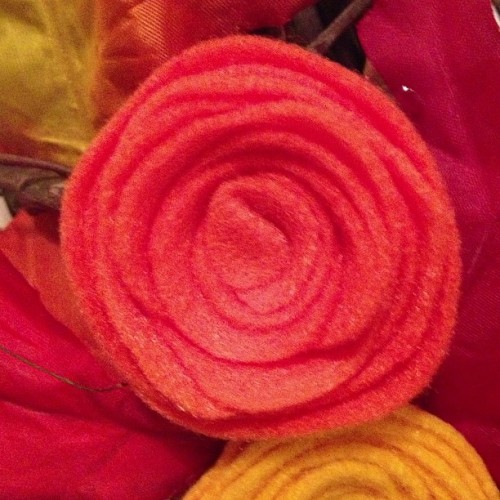
To make the flowers: Place a circular object like a CD on the sheet of felt. The small sheets in the craft section are big enough for three CD-sized circles. Trace the circular object with permanent marker. First, cut the full circle out of the felt. Then, begin cutting the full circle into a spiral toward the center. If you cut a wavy-line spiral instead of a cutting a smooth edge, when you roll the felt up, your flower edge will look like real petals. Once you've cut the spiral, pinch the inside end of the spiral-cut felt, and begin wrapping the strand counter-clockwise around the outside of the pinched end. Poke a straight pin through the flower from the outside edge to the middle, and you're finished! Super easy. You can also use hot glue to glue down the outside end of the felt strand after wrapping it.  

Make as many flowers as you want in as many colors. I chose a deep red, orange and yellow. The craft store had lots of pretty shades (you know, to avoid looking like you're making a decoration for the front door of your neighborhood McDonald's). Once your flowers are all made and secured, set them aside.

I bought a strand of leaves from the craft store, and cut off individual leaves that I wanted to use for the wreath. I played around with the different sizes, shades and overlap of the leaves. Once I figured out an arrangement I liked, I just wove them, stem first, into the vines of the wreath without any further securing. My wreath will be hanging indoors, but for an outdoor wreath you may want to use hot glue to secure the leaves to the wreath. 

After your leaves are placed and secured, it's time to add the felt flowers. If you finished your flowers with a straight pin, be sure to arrange them so that the head of the pin is not showing. The backside of the flowers should be mostly flat, making it pretty easy to add hot glue and attach them to the wreath. A spiral of glue on the back of the flower and pressing and holding it in place for a few seconds should make it secure. Allow the wreath to remain on a flat surface for a few minutes while the glue dries to be sure everything stays tightly in place.  

With your spool of ribbon, you can make a loop to hang your wreath - measure twice, cut once! Use a solid colored wide ribbon, or get creative by mixing different colored or patterned thinner ribbons and twine.  


Monday, September 2, 2013

awesome appetizers: baked pulled pork wontons

Every so often at my house, we love to pig out on homemade pulled pork. I make it in the crock pot with beer. Dark, delicious, flavorful beer. And a few other ingredients. It's great as leftovers for lunch or dinner (I think the flavor gets better a day or two later) and it freezes well. But the last time we made pulled pork, Ash had an idea to try something new with the leftovers: pulled pork wontons.

The wontons were super easy and quick to make.

what you need:
leftover pulled pork
wonton wrappers
BBQ sauce (if desired - for recipe and for dipping)
small dish of water (a shot glass size is plenty)

what you do:
1. Lay your wonton wrappers flat on a baking sheet.
2. Put a small amount of pulled pork in the center of each wrapper (shred a little finer if needed).
3. If you like, add about 1/2 tsp BBQ sauce on top of the pulled pork (another option is to mix the pulled pork with BBQ sauce before making the wontons)
4. Dip your finger in the water, and lightly wet each corner of the wonton wrapper, then fold all corners up and pinch closed.
5. Space the folded wontons on the ungreased baking sheet about an inch apart.
6. Bake at 275º for about 15 minutes, or until the edges of the folded wonton wrappers become golden brown.

These were a great snack! The pulled pork had really absorbed the flavor of the beer and seasonings, so the wantons certainly held their own in the flavor department with or without the BBQ sauce.